Showing posts with label Public Relations Society of America. Show all posts

Tuesday, April 17, 2012

How Tapping into Emotions Plays a Larger Role in Building Brand Trust

The science of selling is changing. With the growth of social media, tapping into emotions has become an increasingly influential part of decision making. Although statistical data hasn’t gone to the wayside, consumers look to fellow purchasers for their opinions of, or experiences with, businesses, as well as goods and services. It’s these experiences and interactions that form people’s opinions and in turn, influence brand trust.
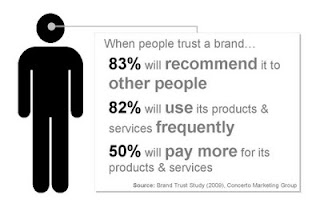
During a Southeastern Wisconsin PRSA luncheon, Eric Goering, manager of global system communications for McDonald’s, discussed the idea of brand trust, commenting, “No one wants to feel like a guinea pig. Consumers want to know that a product or service is already safe and effective.” Referencing McDonald’s new “field to fork” commercials, he continued by suggesting that the value proposition now takes a different form – facts mean less and emotions mean more.


In addition to McDonald’s new commercials, Chipotle has leveraged its new sustainable farming campaign to make that emotional connection with consumers. The commercial has been largely popular among audiences because of its honest, authentic message, which plays into consumers’ demands – products that are fresh, locally grown and nutritious, while also helping to boost the nation’s agriculture industry.


Today, the story is becoming more about these relationships, which highlight a company’s commitment to quality and consistency that drive customer decisions. In turn, those decisions are now broadcast across social networks, earning businesses positive word-of-mouth marketing that ultimately increases sales and new opportunities overtime. In the same vein, this idea should resonate with B2B companies, as true partnerships, not just one-off relationships, become critical to future success.

Have you seen good examples of companies tapping into customers’ emotions? If so, what made it compelling?

Monday, October 10, 2011

Selecting the Right Spokesperson for Your Organization

[HINT: It doesn’t have to be someone from the C-Suite]

Consider this: how long does it take you to form an opinion of someone?

(Three…two…one…)

OK – pencils down. What’s the answer? Just one-tenth of a second, according to Noeleen McGrath, award-winning journalist and founder of McGrath Communications.

That’s why it’s important to select the right spokesperson for your organization. With that in mind, the Southeastern Wisconsin PRSA chapter invited McGrath to present at its most recent luncheon on how to choose the right “face” or “voice” for a company.

So what should you look for in potential spokespeople to create that desired first impression? The decision should be based on three elements: message, audience and experience. What message do you want to communicate, to whom, and what experience is necessary to support that message?

While typical spokespeople tend to be CEOs or other C-level executives, they’re not always the right fit. After answering the questions above, the right spokesperson should meet the following criteria:

Appealing:

While it may sound shallow, the truth is that looks matter. By nature, people want to listen to attractive individuals. That said, it’s important to wear the right outfit on camera. After grabbing someone’s attention, you don’t want viewers to lose your message due to distractions (e.g., a lot of accessories are a no-no). McGrath suggested wearing bold, solid colors, which film well on screen.

Confident, trustworthy & knowledgeable:

You want someone who can stay cool, calm, collected and comfortable in front of the camera, which comes through with confidence and knowledge. As a spokesperson, it’s important to never get emotional or aggressive. Once you expose your emotions, you leave yourself vulnerable to providing poor responses to other questions.

Likeable:

Again, it’s important to remember that not everyone is fit for the job. Therefore, cast a wider net within your organization and find “average joes” who can relate to your specific audience. Establish trust by finding someone who can connect with them on a more personal level – do they have kids, live in the same community, or participate in similar activities?

It’s these three key traits that will gain – and maintain – your audience’s attention, helping to make the right first impression. Aside from these points, what else would you suggest when considering spokespeople?