Wednesday, June 13, 2012

Got Skills? How to Become a Winner in Today’s Competitive Talent Search.


The good news? Manufacturing is on the upswing. The bad news? Skilled worker numbers are on the downswing.  Competition from global manufacturers coupled with an outdated perception of manufacturing held by most young people has created a battlefield for good talent.

In this new reality, the company with the best talent will win the game. And clearly there will be winners and losers in this high stakes game that pits small and mid-market companies against the global giants that exist in every market. “I can’t win this battle” many of these smaller companies might say, but for those willing to think differently, Trefoil Group says “yes, you can.” And we’ll tell you how.

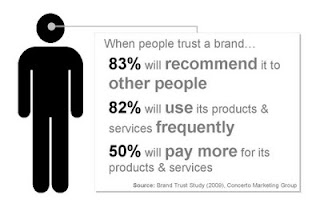
The most important thing your company can do is create a powerful brand. Help recruits see the story of the future and why your company and the work you do matters – to them, to your customers, your communities, your industries. 

The Branding Basics -- there are many ways to create a story worth telling:
  1. Understand what characteristics define your company – Involve everyone from your CEO to your customers and vendors to really delve into what is important. Once you know, market it.
  2. Become a thought leader – through articles, speaking engagements and events.  When prospective employees Google you, give them plenty of reading material that showcases the innovation, knowledge, and involvement of your company.
  3. Update your recruiting – Word of mouth isn’t enough anymore. People spend so much time online that it’s critical to develop a digital presence. Develop a careers page, partner with technical colleges and join social media.
  4. Support government and community hiring initiatives – prospective employees want to be a part of something bigger,  see what you can do to help programs, such as Dream It, Do It, in your area.

Waiting for talent to seek you out is no longer adequate - Manpower Group recently released the results of its seventh-annual Talent Shortage Survey, revealing 49 percent of U.S. employers are experiencing difficulty filling mission-critical positions within their organizations.

It’s time to face this new reality and arm your company with all the necessary tools to succeed in today’s hiring market. Creating the right and differentiating employer brand could be the key to finding the perfect person for your company.

What has your company done to set itself apart from the competition? We would love to hear it.   


Monday, June 11, 2012

What Are You Doing After the Show?

The last trucks loaded with machinery and displays have long since pulled away from the shipping bays at Orange County Convention Center in Orlando – site of NPE 2012, North America’s largest plastics tradeshow.

But many people in plastics are still feeling the energy of the event. And as marketers, we need to keep pursuing those opportunities. 

Much of the promotional work for a tradeshow occurs before and during the event. But marketing doesn’t stop when you hand off the sales leads afterward. The magnitude of the investment – often an entire year’s marketing budget – demands that you channel the show’s momentum long after your booth has been dismantled.

For example, NPE exhibitor Milacron is extending the impact of its investment with a post-show landing page. An email campaign and other vehicles are driving traffic to the site, where visitors can explore photos, videos, news coverage, machine specs and more. The page, adapted from a preshow promotional site, is proving to be a cost-effective way to keep the show’s positive vibes going.
Whether you serve up show presentations as web content or breathe new life into a show floor video, you can make a tradeshow investment live on as long as you let it.
Bottom line: Post-show marketing communications is much more than just sales lead follow-up. With marketing support, selling becomes easier, and your substantial investment generates greater returns. www.milacron.com/NPE

Wednesday, May 16, 2012

On Finding Our TrueCenter™


Relax.

Breathe deeply.

Let all distractions fall away.

Now, ponder the big questions. Who are we? What are we doing? Why are we here?

That’s how it all started a few months back when we embarked on a branding and positioning project for our agency.

It’s a challenging and rewarding process that involves distilling a lot of complex issues down to one simple idea. After a period of intense self-reflection, research, analysis and argument, we’ve re-established our TrueCenter™, and we’re excited to be revealing the results today.

Introducing ...
Introducing Trefoil Group

Cutting through complex issues to produce decisive actions – in our case, a name change – is what we believe makes our team special. In a complicated world, we’re determined to help our clients see clearly toward achieving their goals.

Monday, April 30, 2012

Boosting Consumer Confidence in Interest-Based Advertising


With the increasing use of social networks, particularly Facebook, interest-based advertising is growing rapidly. By analyzing consumers’ online conversations and consumption habits, advertisers can customize their messages to specific audiences. Done right, it increases an ad’s effectiveness and can enhance consumer satisfaction.

But we must be careful, whenever tapping into info about people’s web activity, to earn and maintain their trust (a topic that can be read in more detail here).

To that end, the Digital Advertising Alliance’s (DAA) Self-Regulatory Program – endorsed earlier this year by the White House, Department of Commerce and Federal Trade Commission – provides a good framework for improving consumer confidence and ensuring best practices. Building on the Self-Regulatory Principles for Online Behavioral Advertising, the nation's largest media and marketing associations have collaborated to launch this program to give consumers a better understanding of and greater control over ads that are customized based on their online behavior.


How can you get involved?
  •  Learn about the program by reading the principles, and find out more about the participating associations. To learn how your company can implement the principles, review the Implementation Guides.
  • Register to start using the Advertising Option Icon as a means for providing enhanced notice of online behavioral advertising practices. To register to use the icon, click here.
  • Inform consumers about data practices through clear, meaningful and prominent notices.
  • Register to receive information about how to be listed on the Consumer Opt-Out Page, where consumers will be able to easily opt out of receiving online behavioral advertising from some or all participating companies.
  • Report a complaint if you believe that you have witnessed a practice or ad that may violate the Principles. You can report the incident to either the Council of Better Business Bureaus (CBBB) or the Direct Marketing Association (DMA). Complaints may be filed by consumers, business entities or other stakeholders. 
Thanks to http://www.aboutads.info for the above information on how companies can participate in the DAA’s Self-Regulatory Program.

Tuesday, April 17, 2012

How Tapping into Emotions Plays a Larger Role in Building Brand Trust

The science of selling is changing. With the growth of social media, tapping into emotions has become an increasingly influential part of decision making. Although statistical data hasn’t gone to the wayside, consumers look to fellow purchasers for their opinions of, or experiences with, businesses, as well as goods and services. It’s these experiences and interactions that form people’s opinions and in turn, influence brand trust.

During a Southeastern Wisconsin PRSA luncheon, Eric Goering, manager of global system communications for McDonald’s, discussed the idea of brand trust, commenting, “No one wants to feel like a guinea pig. Consumers want to know that a product or service is already safe and effective.” Referencing McDonald’s new “field to fork” commercials, he continued by suggesting that the value proposition now takes a different form – facts mean less and emotions mean more.


In addition to McDonald’s new commercials, Chipotle has leveraged its new sustainable farming campaign to make that emotional connection with consumers. The commercial has been largely popular among audiences because of its honest, authentic message, which plays into consumers’ demands – products that are fresh, locally grown and nutritious, while also helping to boost the nation’s agriculture industry.


Today, the story is becoming more about these relationships, which highlight a company’s commitment to quality and consistency that drive customer decisions. In turn, those decisions are now broadcast across social networks, earning businesses positive word-of-mouth marketing that ultimately increases sales and new opportunities overtime. In the same vein, this idea should resonate with B2B companies, as true partnerships, not just one-off relationships, become critical to future success.

Have you seen good examples of companies tapping into customers’ emotions? If so, what made it compelling?

Thursday, April 5, 2012

To Lead Your Way to a Stronger Network, Start Here

So, you have a vision. You’re ready to “be the change you want to see in the world” (or in your community, industry or organization). You have aspirations of becoming a change catalyst and want to be viewed as a thought leader.

But where do you start? Who will support your vision? And where can you find these like-minded and equally inspired allies?

Earlier this week, Mary Scheibel presented on the topic of leadership at the Central States Water Environment Association (CSWEA) 2nd Annual Young Professionals Leadership Academy. Her presentation “Taking Your Network to the Next Level,” looked at how to build a supportive, reliable network by first demonstrating your leadership aptitude.

Everyone has to start somewhere, and a leader is no different. Find a cause, organization or an association that’s important to you. Then, figure out where you can make an impact, offer to lead an initiative or program, roll up your sleeves and help get the work done.

The benefits are numerous. You’ll make good things happen. You’ll develop a new or sharpened focus for your career and maybe even your life. You’ll gain emotional fortitude and build character. And in the process, you’ll diversify your network, establishing relationships with business and community leaders you otherwise wouldn’t have met.

Excellence starts with leaders of good character who engage in the entire process of leadership. Exhibit attributes of a values-driven leader – ethical, courageous, conscientious and aspiring. Build your value as a leader and watch your network expand and strengthen.

Discover other key success factors in taking your network to the next level by viewing the presentation slides.

Monday, April 2, 2012

Rethinking the Stock Answer for Photography

The heroic handshake. The people in suits jumping for joy. The meeting room full of diverse employees.

I’m sure you have your own examples of stock photography clichés. Of course, there are reasons why stock images are so popular. They’re fast. They’re easy. They’re affordable.

Problem is, certain types of stock photos have become way too common. That’s not to say there aren’t lots of great stock images around. You just have to work harder to present the images in a fresh way and make sure they’re relevant and meaningful to your audience. (Here’s some good use of stock photography, for example.)

Or, if you have the right opportunity and resources, and you really want to stand out and show what’s special about your company, it may be time once again to consider original photography in some instances – your website and your brand collateral, perhaps.

Yes, it’s a significant investment. Yes, it takes more time and effort. But here are just three reasons why it may be worth the trouble:

  • Personality. Pictures of the real people in your real organization show who you really are – much better than images of nameless guys and gals with call-center headsets ever could.
  • Professionalism. High-quality original photos convey a strong company and a respect for your audiences, who don’t have to see those same old, arms-folded executive teams.
  • Relevance. You can set up your images to support your message and brand, instead of scouring iStock for a standard image that’s only marginally related.

Some of the advantages of original photography are on display at www.lubar.com and www.mertz.com (above right), two award-winning sites we’ve developed recently for clients.

So please, don’t force us to look at another generic close-up of fingers on a keyboard. Give your stock images some more thought, or give original photography a shot in your next marketing communications vehicle.